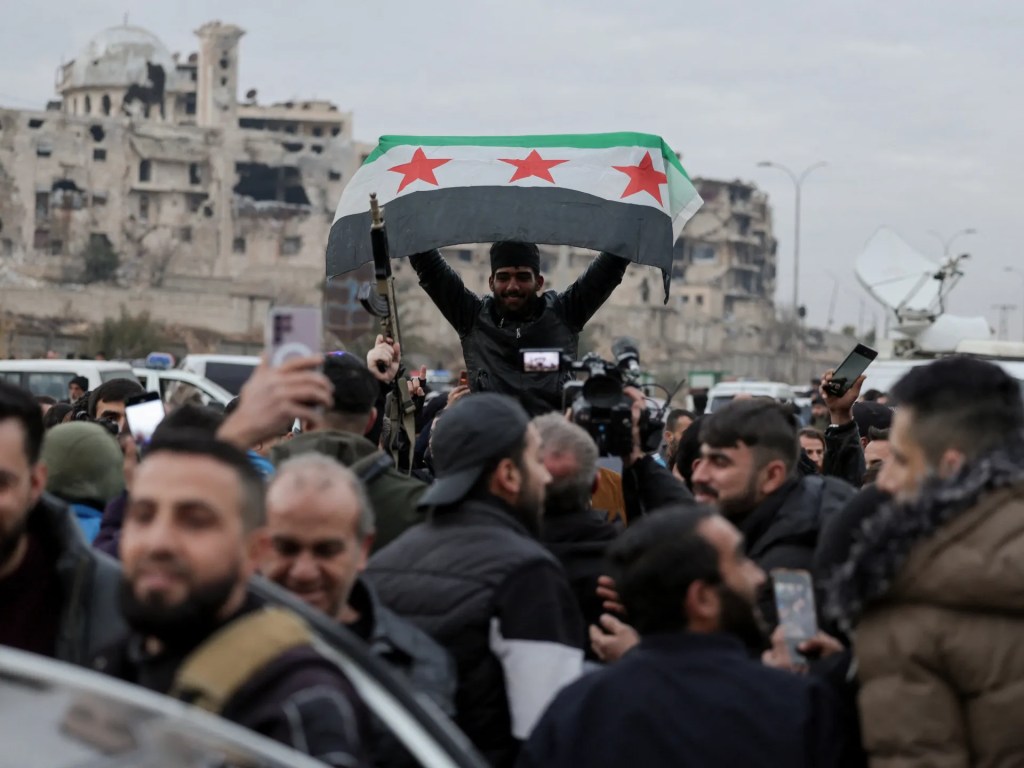
When Bashar Al-Assad was evacuated from a Russian military base and forced into exile in Moscow in December 2024, many had hoped for a new beginning in Syria. The country had been ravaged by a brutal civil war that started as part of the wider Arab Spring in 2011. However, the war seemed to have ended when the Islamist group known as Hayat Tahrir al-Sham (HTS), led by the current Syrian President, Ahmed Hussein al-Sharaa (also known as “Julani”) captured Damascus and took control of the country.
Since then, Syria has experienced somewhat of a fragile peace as Julani and his associates have attempted to legitimise themselves both in the eyes of their own nation and the international community. But due to the complicated nature of the conflict, HTS are not the only group vying for control in Syria. Since 2012, a large area in the Northeast of the country, known as “Rojava” has been under the control of the Syrian Democratic Forces (SDF). The group, as well as the area they govern, is largely populated by Kurds, although Arabs, Christians, Yezidis and Turkmen are also represented. The region does not claim to pursue full independence but rather autonomy within a federal and democratic Syria.
Despite sharing common enemies such as the Assad regime and ISIS, tensions between the SDF and HTS (now known as the Syrian Transitional Government) have been rising since the latter came into power. Although the two sides were never exactly trusting of one another, the new government’s decision, under extreme pressure from Turkey, to integrate Syrian National Army (SNA) militias into the new Syrian army was heavily criticised by the Kurds. The SNA is in reality, a Turkish proxy force that, along with the Turkish military, have been clashing with the SDF since 2015. The pressure from Turkey stems from its long-standing opposition to an autonomous Kurdish entity on its border, fearing it could fuel Kurdish nationalism in its own country. The SNA has also been accused of kidnapping civilians, looting, beatings, and other human rights violations against Kurds. Kurdish authorities and the SDF have also condemned reported war crimes and massacres by the Syrian Transitional Government against Alawite, Christian and Druze civilians in Western and Southern Syria.
Despite these tensions, US-led talks between the new government and Kurdish authorities resulted in the 10th March agreement. The agreement laid out principles for the integration of the Kurdish-controlled regions into the new Syrian government as well as the integration of SDF forces into the new Syrian Army. However, progress on these integrations has been minimal, with both sides accusing the other of deception and acting in bad faith. This eventually culminated in the breakout of heavy fighting in the northern city of Aleppo last week. Aleppo has been a contested area since the fall of Assad, with the SDF controlling the Kurdish majority, Ashrafieh and Sheikh Maqsoud neighbourhoods, and government forces controlling the rest of the city.
Deadly clashes between the SDF and government forces first began on the 6th January, with both sides blaming the other for the breakout of fighting. Gun battles, rocket attacks and drone strikes were reported in the Sheikh Maqsoud neighbourhood throughout last week before an internationally mediated ceasefire was agreed over the weekend. Current reports suggest that 12 people were killed in the fighting, among them 2 civilians, as well as more than 45,000 people forced to flee the city.
As part of the ceasefire deal, SDF forces withdrew from the city on Sunday morning. Aleppo residents have also begun to return to the city after fleeing the fighting. However, the atmosphere across the country is still tense, and with relations between both sides at an all-time low, there is little hope that the March 10th agreement will be fully implemented anytime soon.
After 15 years of fighting, Syrian’s are tired of war. With millions dead and millions more displaced, both the SDF and the new government are keen for a fresh start. But with the ghosts of the previous conflict still lurking, it is hard to say when we will see the true beginning of peace time in Syria. Turkey’s influence over the new government and their steadfast opposition to a Kurdish autonomous region right on its border may prove to be too big an obstacle. Both sides have tens of thousands of fighters at their command and with neither side willing to concede what they have sacrificed so much to gain, the question must be asked: Is Syria on the brink of another full-blown civil war?
 The Underground
Leave a comment